
Alumni Perspectives on Building Belonging in the Legal Industry
Written by Kayla Muh
The BYU Law Alumni Chapter Belonging & Inclusion Committee hosted a panel this month for BYU Law students and alumni, entitled “Navigating Belonging in an Anti-DEI Climate: Career Development, Hiring, and Inclusion in the Legal Industry.”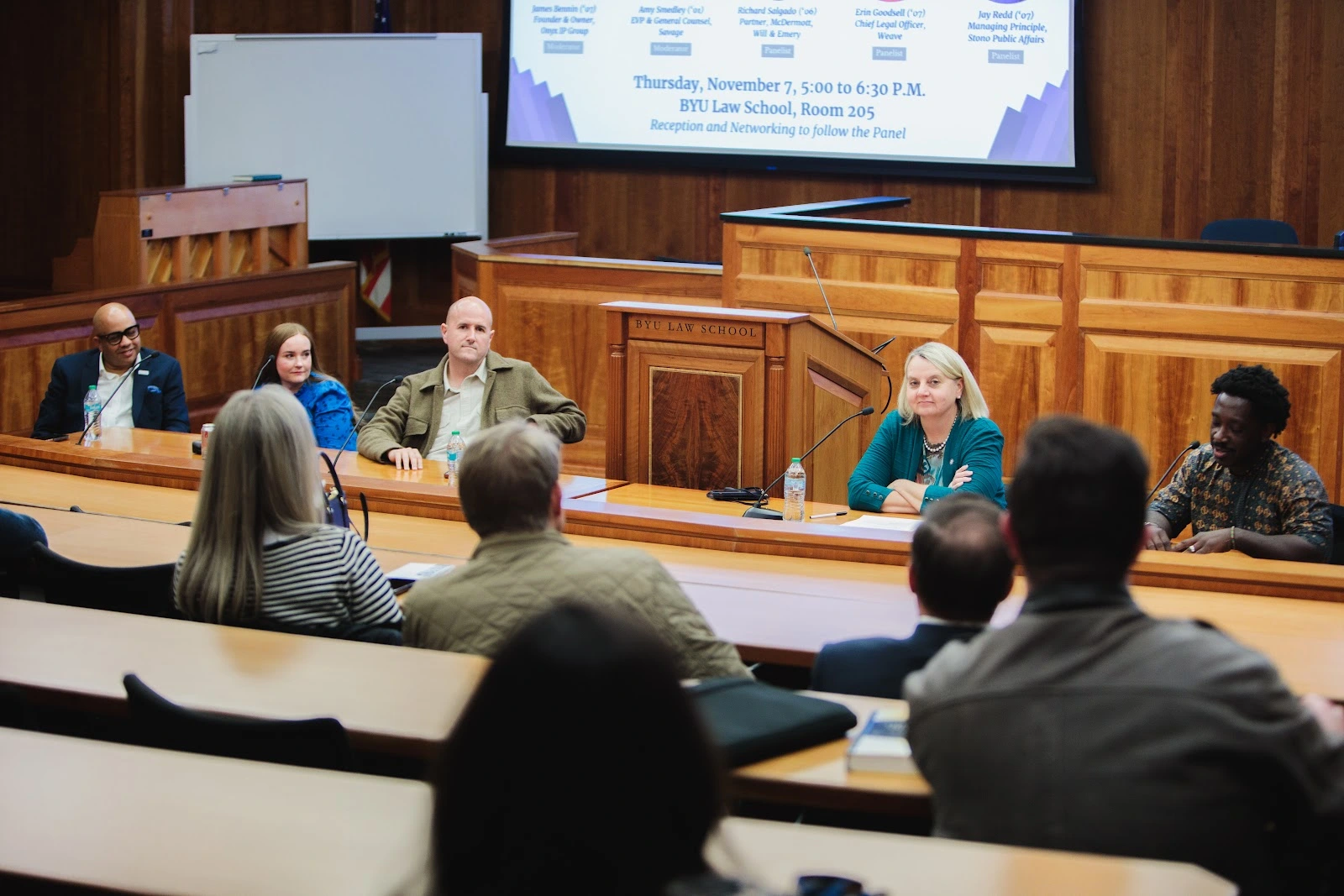
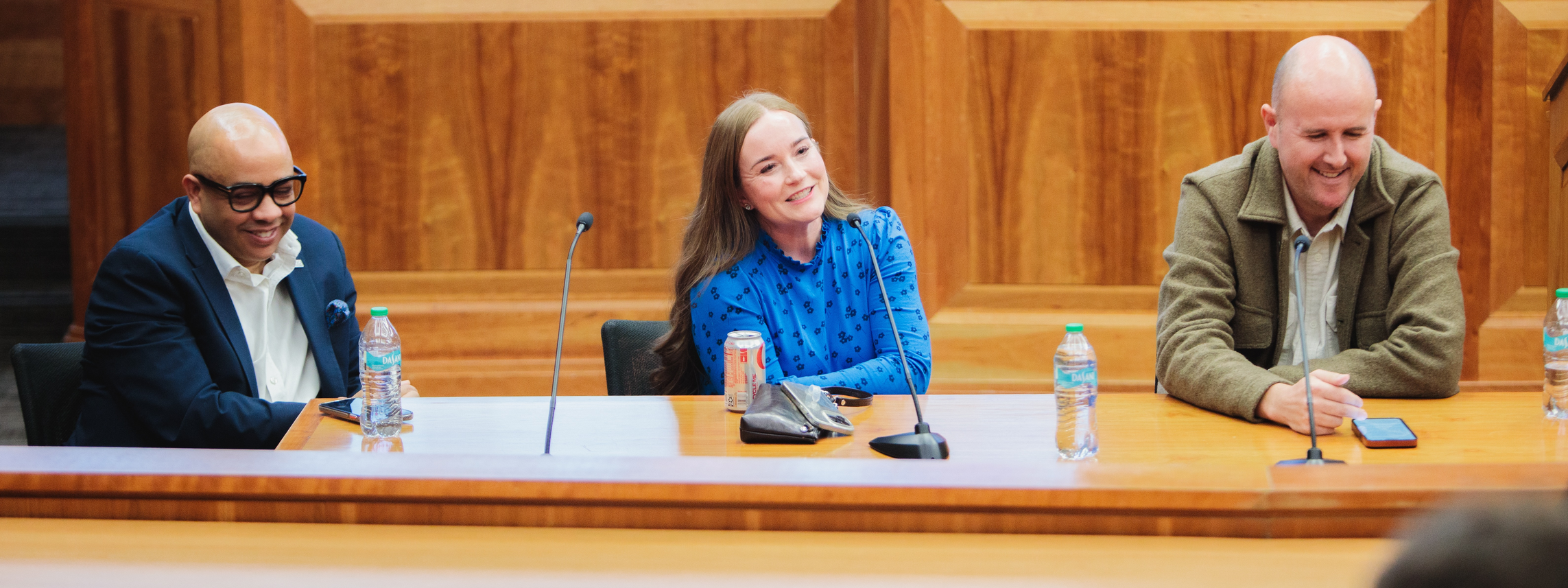
Panelists included Richard Salgado (‘06), Partner at McDermott Will & Emery, Erin Goodsell (‘07), Chief Legal Officer at Weave, and Jay Redd (‘07), Managing Principal at Stono Public Affairs. The panel was moderated by James Bennin (‘07), Founder and Owner of Onyx IP Group, and Amy Smedley (‘01), Executive Vice President and General Counsel at Savage.
The panel’s discussion was centered on cultivating climates of belonging in the workplace, especially in those where diversity, equity, and inclusion (DEI) are not as present. James opened the discussion by sharing his hopes for the evening. “I’m so happy to be here at the Law School [to] have this discussion with you all,” he said, “We hope that it will be edifying and [that] we’ll be able to come out with some action items to help all of us further this important goal that we have.”
The conversation began with a discussion of challenges related to diversity, equity, and inclusion that organizations face today. Erin shared that what she finds challenging is “navigating very strong differences of opinion” on how it should be addressed. She said that the DEI conversation has become “a really polarized issue” and that it’s difficult to know how to help create an environment where everyone feels welcome with differing ideas present about what is acceptable to address. The panel agreed that differing opinions about DEI are often a challenge in the workplace.
“The reality is that if we have an event that’s branded as a diversity and inclusion event, there’s a population that won’t go, and it’s the population that needs it,” Erin said. She shared how at her company, they’ve been reconsidering their approach to talking about DEI. They’ve contemplated the idea that the ability to create a welcoming environment is just a leadership skill. “When we’re teaching people to have empathy, when we’re teaching people about different experiences and how to engage with different people on their team, that’s called leadership. And maybe we need to focus a little bit more on the leadership component,” she said. 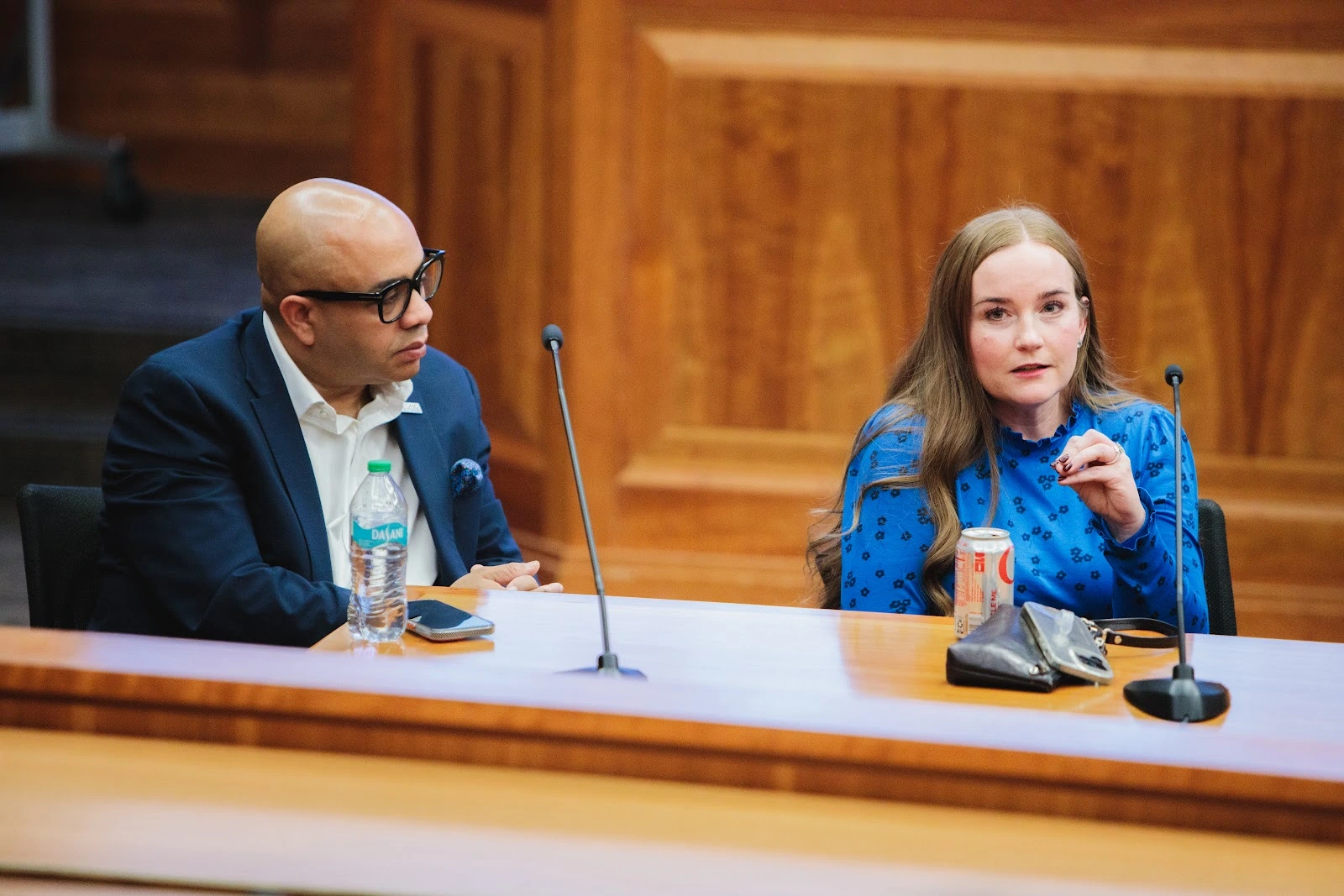
The panel also discussed how current events can play a role in how organizations address needs. Jay emphasized the importance of proactiveness in creating inclusive climates before issues arise. He shared that “creating those kind[s] of environments from the beginning” ensures that when conflicts do arise, everyone feels heard.
The conversation then led to a discussion about the current underrepresentation that is present in the legal industry. Erin spoke on the importance of keeping DEI values in mind when hiring, explaining that extending applicant pools to have diverse groups of applicants and using a fair way of evaluating will boost company performance. “It’s about company performance. It’s not about tokenism, it’s not about a quota. It’s about getting the best people,” she said. Richard agreed, reinforcing the importance of DEI because of issues like underrepresentation that “we have to break through”.
To close, the panel spoke to the audience on the unique skill set they are equipped with as law students and alumni to be a part of the solution. Erin mentioned the need for empathy in law, how it’s a fundamental skill as a lawyer and also a fundamental skill necessary to incorporate DEI. Speaking to the students, she said, “I do think that there’s a lot of skills hopefully you all are learning here that will help you be leaders in this space.”
Jay also brought up the unique opportunities that BYU Law provides, speaking on the faith aspect of a BYU Law education and how the knowledge that we are all children of God can impact the way we interact with others. Erin added that there are lots of ways for one to learn about how others experience the world that will “help us be more effective leaders and better disciples of Christ”.
Jay ended his remarks by thanking the audience for their desire to be a part of the conversation. He recognized the importance of acknowledging the problem and working together to find a solution. “The more conversations we have like this, it just makes us all better,” he said. 
In his final thoughts, Richard stated that what DEI is truly about is “bringing people together”, something that the panel hopes BYU Law will continue to prioritize. Panelists pointed out the potential BYU Law students and alumni have to be leaders in their communities and create climates of belonging. Panelists also shared their hope that BYU Law continues to strive to follow the Savior’s example and bring others together.